How to Become a Dog Groomer: Career Guide for 2026
From zero experience to professional groomer: training, certification, salary expectations, and career paths.
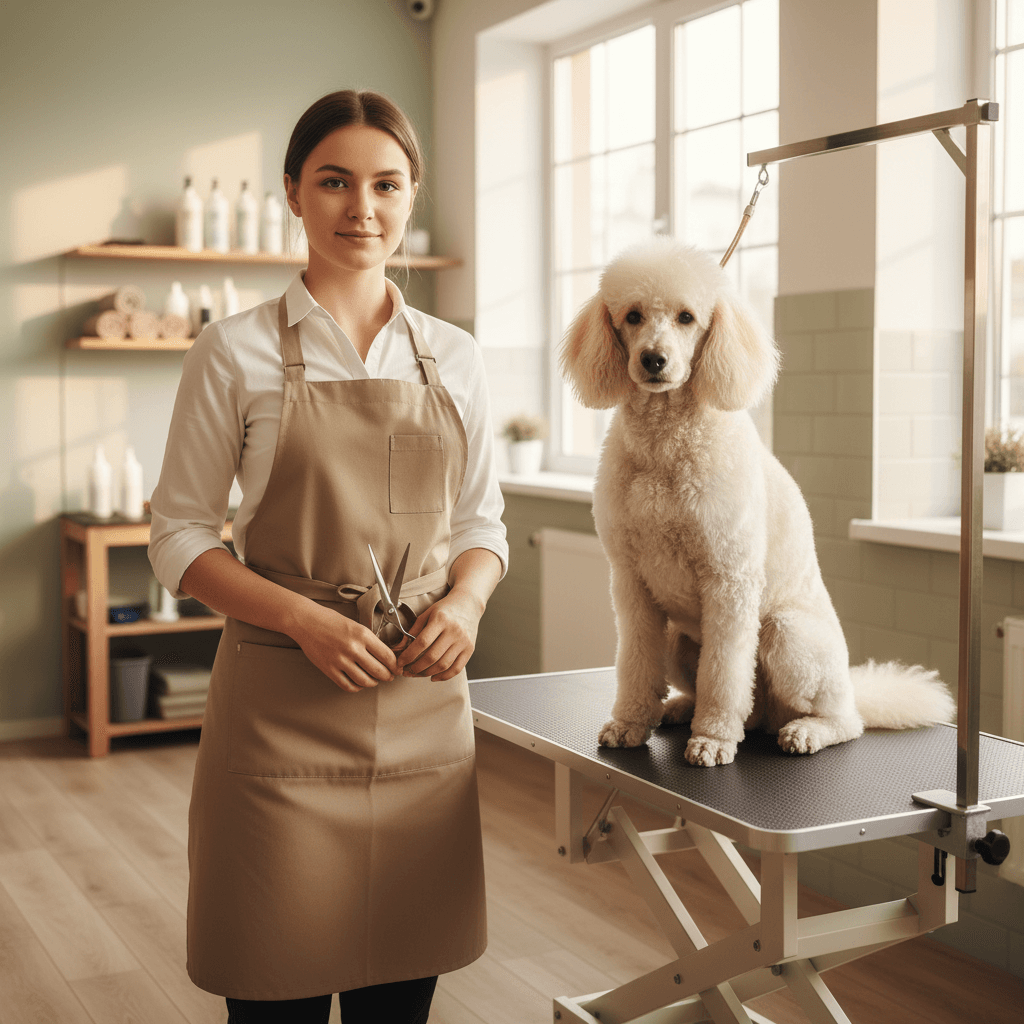
Dog grooming is one of the most personally rewarding careers in the pet industry, and in 2026, it is also one of the most in-demand. Americans spend over $150 billion on their pets every year, and professional grooming is a non-negotiable part of responsible pet ownership for millions of households. That means steady work, repeat clients, and real earning potential for people who are willing to put in the time to learn the craft properly.
But "how do I become a dog groomer?" is a question with a surprisingly complicated answer. There is no single licensing body, no universal curriculum, and no one-size-fits-all path. Some groomers train at a dedicated grooming school for six weeks. Others apprentice for a year under a mentor. A few are entirely self-taught. The right path depends on your budget, your timeline, your local market, and how quickly you want to start earning.
This guide covers everything: from whether grooming is the right fit for your personality, to salary expectations at every career stage, to the specific certifications that actually move the needle on pay.
Is Dog Grooming the Right Career for You?
Before investing money in a grooming school or equipment, it is worth taking an honest look at what the job actually involves day to day. Dog grooming looks fun and creative on Instagram. In practice, it is also physically demanding, occasionally stressful, and not always glamorous.
A Day in the Life of a Dog Groomer
A typical grooming day starts early, often 7 or 8 AM, with check-ins, reviewing the appointment book, and setting up your station. You will spend the bulk of your day bathing, blow-drying, brushing, clipping, scissoring, and finishing dogs one after another, usually completing between six and twelve grooms depending on the size and complexity of the breeds you are working with.
In between grooms you are communicating with clients at drop-off and pickup, noting skin conditions or behavioral issues, cleaning and sanitizing your station and equipment, and often helping other groomers or managing the front desk. The last hour of the day is usually cleanup, restocking, and preparing for the next morning.
It is a fast-paced environment. When it is busy (and it often is) you will have a dog in the tub, one on the table, and an owner calling to ask if their Goldendoodle is ready. Time management and multitasking are as important as scissoring technique.
The Honest Pros and Cons
Every career has trade-offs. Here is a clear-eyed look at both sides of professional grooming:
What groomers love about the job:
- Creative expression. Every breed has a different standard cut, and creative grooming opens up an entire world of artistic possibility. The transformation from a matted, overgrown dog to a clean, well-styled one is genuinely satisfying.
- Animals all day. If working with dogs is your idea of a good day, grooming delivers. You are hands-on with pets constantly.
- Flexible scheduling. Especially once you go independent, you control your calendar. Many groomers work four-day weeks or take school holidays off to match their family schedules.
- Growing demand. Pet ownership rates are at all-time highs. The Bureau of Labor Statistics projects strong growth in animal care occupations through the next decade, and grooming is one of the more recession-resistant services; people keep grooming their dogs even when they cut other spending.
- Low barrier to entry. You do not need a four-year degree. With the right training, you can be earning within a few months.
What groomers find challenging:
- Physical toll. Standing for eight-plus hours, lifting large dogs, and repetitive scissoring and clipping motions take a toll on your back, shoulders, wrists, and knees. Many veteran groomers develop repetitive strain injuries if they do not take care of their bodies.
- Difficult dogs. Anxious, reactive, or aggressive dogs are part of the job. No matter how skilled you are, some dogs are genuinely difficult to groom safely. You will get scratched, bitten, and urinated on. It happens to everyone.
- Emotional weight. Groomers are often the first to notice signs of skin disease, pain, or neglect. You will sometimes be the one to tell an owner that their dog's teeth are in terrible condition or that they have a suspicious lump. That is hard.
- Seasonal income swings. Spring and fall are the busiest seasons. Some groomers see a significant dip in January and February. Building a loyal client base helps smooth this out, but it takes time.
- Starting pay is modest. Entry-level grooming wages are not high. The career rewards patience and skill-building over several years before income becomes truly comfortable.
Personality Traits That Succeed in Grooming
The groomers who build long, successful careers tend to share a few common traits: genuine patience with both animals and people, an eye for detail and proportion, physical stamina, a calm demeanor under pressure, and strong communication skills. You will have clients who are protective and anxious about their pets, clients who micromanage the cut, and clients who are unhappy no matter what you do. Emotional steadiness and the ability to communicate professionally make an enormous difference.
If you love dogs but tend toward frustration when things do not go smoothly, or if you find the physical demands of standing-only work difficult, it is worth shadowing a groomer for a day before committing to training. Most established groomers are happy to have an observer come in. Just ask.
Dog Groomer Salary and Earning Potential
One of the most common questions from people considering a grooming career is: "How much can I actually make?" The honest answer is that it varies enormously based on experience, location, employment type, and whether you eventually own your own business. Here is a realistic breakdown:
| Career Stage | Annual Income Range | Hourly Equivalent | Notes |
|---|---|---|---|
| Entry Level (0–1 year) | $25,000–$30,000 | $12–$15/hr | Bather or junior groomer; learning under supervision |
| Experienced (2–4 years) | $35,000–$50,000 | $17–$24/hr | Full-service groomer; building loyal client base |
| Senior / Specialist (5+ years) | $50,000–$70,000 | $24–$34/hr | High-volume, show grooming, or specialty work |
| Business Owner | $60,000–$120,000+ | Varies | Depends on salon size, location, and efficiency |
Hourly vs. Commission vs. Salary
How you are paid matters as much as what you are paid. Grooming compensation structures vary widely:
- Hourly wage is common at corporate chains like PetSmart and Petco, especially for new groomers. It provides stability but caps your upside: you earn the same whether you do six grooms or ten.
- Commission (typically 45–55% of the groom price) is the most common structure at independent salons. A groomer charging $80 per groom and taking 50% commission earns $40 per dog. On a ten-groom day that is $400. Commission rewards speed and efficiency once you are experienced, but can feel precarious when you are still building your client base.
- Booth rental means you pay the salon a flat fee (often $300–600/month) to use their space and keep 100% of what you charge. This works well for established groomers with a loyal following but carries risk for newer ones.
Tips and Geographic Differences
Tips are a meaningful part of grooming income. Satisfied clients regularly tip 15–25% on top of the grooming fee, and at some salons, tips can add $10,000–$20,000 per year to a groomer's take-home income. Building the kinds of relationships where clients tip consistently (remembering details, sending text updates mid-groom, making the dog love coming in) is a real skill that pays off financially.
Geography matters significantly. A groomer in Manhattan, San Francisco, or Seattle can charge $150–250 for a doodle groom. The same service in rural Ohio might price at $60–80. Cost of living adjusts some of that gap, but high cost-of-living urban markets do tend to offer meaningfully higher grooming incomes for experienced professionals.
Education and Training Paths
There is no single required pathway to becoming a dog groomer. Each approach has real advantages and real trade-offs. The right choice depends on your budget, timeline, and learning style.
| Training Path | Duration | Cost | Best For |
|---|---|---|---|
| Grooming school | 4–16 weeks | $3,000–$10,000 | Structured learners who want a credential fast |
| Apprenticeship | 6–12 months | Often paid (earn while you learn) | Hands-on learners; best long-term skill foundation |
| Online courses + practice | 3–12 months | $200–$2,000 | Self-motivated learners with access to practice dogs |
| Self-taught | 12–24+ months | Cost of equipment only | Those with dog access and high patience for trial/error |
Grooming School
Dedicated grooming schools, like Nash Academy, the New York School of Dog Grooming, or state-licensed vocational programs, offer the most structured path to grooming competency. A typical program runs eight to twelve weeks full-time and covers breed profiles, bathing and drying techniques, clipper and scissor work, safety and handling, client communication, and salon management basics.
The advantage of grooming school is compression: you get a concentrated dose of instruction and hands-on practice that would take much longer to accumulate through trial and error. Many programs also assist with job placement. The main drawbacks are cost (quality programs typically run $4,000–8,000) and the reality that a few weeks of school cannot replace years of real-world experience. Graduates still need significant on-the-job experience before they are truly proficient.
When evaluating schools, look for a high ratio of hands-on time to classroom instruction, a diverse range of breeds in their practice dog program, instructors who are working or recently retired professionals, and transparency about graduate placement rates. Avoid programs that promise you will be "job-ready" after just a few weeks with minimal hands-on work.
Apprenticeship
Learning under an experienced mentor is arguably the most effective way to develop into a well-rounded groomer. A typical apprenticeship begins with bathing and drying, progresses to basic finishing work, then gradually moves into full grooms over six to twelve months as your skill and speed improve.
The major advantage is that you are paid while you learn. As a bather, you might earn $13–16 per hour from day one. You also absorb the rhythms of a real salon: how to handle difficult appointments, how to manage client expectations, how to clean and maintain equipment. The apprenticeship path tends to produce groomers with better all-around judgment because they have seen hundreds of real situations, not just curated training scenarios.
The challenge is finding the right mentor. Not every experienced groomer is a good teacher, and not every busy salon has time to invest in training someone from scratch. If you are pursuing this route, be upfront about your goals, offer to start at a lower wage in exchange for structured learning, and look specifically for salons or mobile groomers who have trained assistants before.
Online Courses and Hands-On Practice
The rise of high-quality online grooming education, through platforms like Paragon School of Pet Grooming, Udemy, or breed club resources, has made self-directed learning genuinely viable. Video instruction is particularly effective for grooming because you can pause, rewind, and watch technique demonstrations repeatedly.
The critical limitation of online-only training is that scissoring, clipper control, and dog handling simply cannot be learned by watching videos. You need dogs in front of you. Online training works best as a supplement to hands-on practice: arranging practice dogs among friends and family, volunteering at shelters (many allow grooming volunteers), or pairing online instruction with a part-time bather position.
Self-Taught
Some groomers, particularly those who grew up around dogs or have backgrounds in related animal care, teach themselves through YouTube, breed books, and practice on their own or neighbors' dogs. This path is slower and requires a high tolerance for feedback and imperfect results along the way, but it costs the least and has produced many skilled professionals.
If you go this route, be honest with yourself about the quality of your work before charging clients. The self-taught path works best when paired with periodic evaluation from an experienced groomer, attendance at grooming competitions and seminars, and a genuine commitment to continuous improvement.
The Recommended Combination
The most effective path for most people: complete a reputable grooming school program to build a solid technical foundation, then take an apprenticeship or junior groomer position for 12–18 months to develop real-world speed, judgment, and a client base. The school gives you structure and credibility; the apprenticeship gives you depth.
Dog Grooming Certifications
Unlike veterinary technicians or cosmetologists, dog groomers are not legally required to hold a license in most U.S. states. Certification is voluntary, but that does not mean it is unimportant. The right certifications signal professional seriousness, can increase your earning potential, and matter when you eventually run your own business.
The Major Certification Bodies
- National Dog Groomers Association of America (NDGAA). One of the oldest and most respected certification bodies in the industry. The NDGAA offers a Certified Pet Stylist (CPS) designation and a National Certified Master Groomer (NCMG) at the advanced level. Testing involves both written and practical components and covers multiple breed profiles. NDGAA certification is well-recognized by employers and clients alike.
- International Professional Groomers (IPG). Offers the Internationally Certified Master Groomer (ICMG) designation. The IPG certification is respected in the show grooming and competition community. Tests are rigorous and cover a wide range of breeds.
- International Society of Canine Cosmetologists (ISCC). Known particularly for its emphasis on creative grooming alongside traditional skills. ISCC certification carries weight with groomers who want to work in the creative or competition grooming space.
- AKC Safety Certified Professional Groomer (SCPG). A newer certification focused specifically on safety protocols, animal handling, and recognizing health emergencies. Not a full grooming credential, but increasingly valued as a differentiator, particularly for groomers working with puppies or anxious dogs.
Which Certifications Actually Matter
For most working groomers, the NDGAA CPS is the highest-value credential to pursue first. It is broadly recognized, the testing process reinforces genuine skill development, and it is the certification that most clients and employers know by name. The NCMG designation is worth pursuing once you have five or more years of experience and want to position yourself at the top of the market.
AKC Safety Certification is worth completing even early in your career. It is relatively accessible and the safety knowledge it covers is genuinely important. Creative grooming certifications matter primarily if you want to compete or build a brand around artistic work.
In terms of pay impact: certified groomers typically command 10–20% more than uncertified peers at the same experience level. More significantly, certification helps justify higher prices when you go independent. A business card that reads "Certified Master Groomer" gives clients a concrete reason to trust you and pay your rates.
State-Specific Requirements
A small number of states, including New Jersey, Virginia, and a growing list of others, have introduced or are considering grooming-specific regulations that may include minimum training hours, facility standards, or reporting requirements. Always check your state's current requirements, as the regulatory landscape for pet grooming is evolving. The Groomers' Professional Alliance maintains an updated state-by-state guide.
Essential Skills Every Groomer Needs
Technical skill in grooming is not a single thing. It is a cluster of distinct competencies that take years to develop fully. Here is what you need to build, and why each matters:
Breed Knowledge and Coat Types
There are over 200 AKC-recognized breeds, and each has a distinct coat type, standard cut, and grooming requirement. Double-coated breeds like Huskies and Golden Retrievers need deshedding, not clipping. Wire-coated terriers are traditionally hand-stripped, not clipped. Doodles, the most common dogs in most modern salons, have a wide range of coat textures depending on their generation and specific genetics.
A solid groomer understands at minimum: smooth coats, double coats, single-layer silky coats, curly and wavy coats, wire coats, and drop coats. Knowing how to assess a coat on sight, reading its texture, condition, and maintenance history, is a foundational diagnostic skill that shapes every decision you make at the table.
Scissoring Technique
Scissoring is the most difficult technical skill in grooming and the one that most clearly separates average groomers from excellent ones. Proper scissoring involves understanding line, balance, and proportion; controlling the angle and tension of each cut; and executing clean, consistent results even when a dog is moving or fidgeting. It takes years of deliberate practice to develop a truly trained eye and steady hand. Scissoring workshops and competitions are among the best ways to accelerate improvement.
Clipper Work
Clipper work, selecting the right blade, understanding how blade length changes with coat direction, maintaining even pressure and consistent speed, is the backbone of efficient grooming. Clipper burn from overheated or improperly used blades is one of the most common grooming injuries and is entirely preventable with proper technique. Learning to read when a blade is pulling rather than cutting, and how to troubleshoot clipper problems on the fly, is essential.
Handling and Restraint
Safe, calm, humane handling is arguably the most important skill in grooming, more important than any cut or finish. An anxious dog in the wrong hands becomes a dangerous situation. Understanding canine body language, knowing when to apply gentle restraint and when to back off, recognizing the early signs of stress before they escalate: these are the skills that keep you and the dog safe, and that clients trust you with.
Skin and Health Assessment
Groomers see more of a dog's body than most veterinarians do in any given year. You will be among the first to notice lumps, hot spots, ear infections, dental disease, parasites, and weight changes. Knowing which observations to document and communicate to clients, and which warrant an immediate referral to a vet, is a professional responsibility that builds enormous trust with clients over time.
Customer Communication
Most grooming complaints are communication failures, not skill failures. Learning to conduct a thorough intake consultation, set realistic expectations about what a certain coat condition will allow, explain pricing clearly, and deliver constructive feedback about a dog's health or behavior are all skills that take deliberate practice. The best groomers are as good with people as they are with dogs.
Time Management
In a commission-based environment, your income is directly tied to how many dogs you can groom safely and well per day. Time management, knowing how to sequence a groom efficiently, batch drying time productively, and schedule appointments realistically, determines whether you earn $200 or $400 on a given day. It is a skill most groomers develop through experience, but it can be accelerated by working in busy, well-run salons where efficiency is expected.
Building Your Grooming Kit
When you work for a salon, your employer typically provides the major equipment. But as you advance, and especially when you go independent, you will need your own professional kit. Here is a realistic breakdown of what you need and what it costs:
| Equipment | Price Range | Notes |
|---|---|---|
| Clippers (professional grade) | $150–$300 | Andis, Oster, or Wahl; buy at least two |
| Clipper blades (set of 6–10) | $15–$30 each | #10, #7F, #5F, #4F, #30, #40 are essentials |
| Scissors (straight, curved, thinning) | $100–$400 per pair | Quality scissors are worth the investment; they last years |
| Grooming table with arm | $200–$500 | Hydraulic or electric tables cost more but save your back |
| High-velocity dryer | $300–$600 | A proper HV dryer cuts drying time dramatically |
| Brushes and combs (full set) | $50–$100 | Slicker, pin, dematting, greyhound comb |
| Shampoos and conditioners | $50–$100/month | Professional concentrate; hypoallergenic, deodorizing, whitening |
| Nail tools (clippers, dremel) | $30–$80 | Dremel finishing is increasingly expected at higher price points |
| Ear care, eye care supplies | $20–$40 | Ear powder, ear cleaner, eye wipes |
Total starter kit: approximately $1,000–$2,000 for a working set of professional tools. You can reduce this by buying used clippers and tables. Grooming equipment holds up well and the secondhand market (Facebook Marketplace, GroomersHelper forums) is active. Do not scrimp on scissors; a poor-quality pair will fatigue your hand and produce inferior results.
As your career progresses, you will accumulate a larger blade collection, multiple scissor pairs for different tasks, specialty shampoos, and eventually larger equipment like stand dryers or tubs. A well-equipped professional setup for an independent groomer typically runs $3,000–$6,000 total.
Getting Your First Grooming Job
Breaking into the industry is easier than many people expect, primarily because demand for trained help in salons consistently outpaces supply. The key is knowing which entry points exist and how to position yourself for each.
The Bather Position: The Standard Entry Point
Most groomers begin as bathers, bathing, drying, and doing basic finish work (nail trimming, ear cleaning, blueberry facials) under the supervision of experienced groomers. Bather positions typically pay $13–16 per hour and require no prior formal training. They are the most accessible entry point into a grooming career.
The value of a bather position goes far beyond the paycheck. You learn the rhythm of the salon, observe advanced groomers' technique daily, develop dog handling skills on a wide range of breeds and temperaments, and build relationships that can turn into mentorships. Most full-service groomers working in independent salons today started as bathers. The transition from bather to groomer typically takes 12–24 months, depending on the salon's willingness to give you training opportunities and your own initiative in seeking them out.
Corporate Chains: Paid Training Programs
PetSmart and Petco both run structured grooming training academies that pay you a wage while you train. PetSmart's Grooming Academy, for example, is a six-to-ten week program that covers bathing, drying, breed profiles, and basic finishing, with ongoing mentorship after graduation. You commit to working for them for a period after completing the program, but it is a legitimate way to get trained at no cost to yourself.
The trade-off is volume and environment. Corporate salon groomers typically handle high volumes of dogs in a standardized, fast-paced environment. You will develop speed and consistency, but you may have less opportunity for the nuanced breed-specific work that defines artisan grooming. Many groomers use corporate training as a launchpad, then transition to independent salons or go mobile after two to three years.
Mobile Grooming Assistants
Mobile groomers, who groom in a custom-equipped van at the client's home, frequently look for assistants to help with bathing and handling, particularly when their business is growing. Mobile assistant positions can be excellent training environments because you work closely with one experienced groomer all day, you see a wide variety of dogs in their home environments, and you learn the logistics of running a mobile operation from the inside.
Building a Portfolio
Before/after photos are the currency of the grooming industry. Start documenting your work from your very first grooms. A clean, well-lit smartphone photo of a finished dog takes thirty seconds to capture and will be invaluable when you eventually market your own business. Over time, build a portfolio that shows your range across breeds and cut styles. An Instagram profile with consistent, high-quality before/after content is a more powerful job application than any resume.
Career Paths in Dog Grooming
Dog grooming is not a career with a single ladder. There are multiple branching paths, and the right one depends on what you want your work life to look like five and ten years from now.
The Salon Track
The traditional path: bather → junior groomer → full-service groomer → senior groomer → salon manager → salon owner. Each stage brings higher pay, more autonomy, and more responsibility. Senior groomers in busy markets can earn $55,000–70,000 per year. Salon managers add scheduling, hiring, and client management to their plates and typically earn a salary rather than commission. Salon ownership is covered in the next section.
Mobile Grooming
Mobile grooming has grown dramatically over the past decade, driven by the convenience premium that pet owners are willing to pay. Mobile groomers typically charge 20–40% more than salon groomers for the same service, work with one dog at a time, and build intensely loyal one-on-one client relationships. The trade-offs: van maintenance and fuel costs are significant, and working alone in a small space with no immediate backup can be challenging with difficult dogs. See our guide on starting and running a mobile grooming business for a full breakdown.
Specializations
- Show grooming. Preparing dogs to breed standard for conformation competition is a highly specialized skill that commands premium prices. Show grooming clients are demanding but loyal, and the work is technically rigorous in the best way. Breaking into the show grooming world typically requires apprenticing under a handler or breeder.
- Creative grooming. Dyeing, sculpting, and styling dogs as artistic canvases has grown into a genuine competitive discipline. Creative grooming competitions draw large audiences and the top practitioners have significant social media followings. This specialization requires strong artistic instincts and significant additional training.
- Cat grooming. Cat grooming is a distinct skill set: felines require different handling techniques, different equipment, and a different temperament from the groomer. Cat grooms command premium prices (often $100–200 per cat) and there is far less competition than in dog grooming. A certified cat groomer can build a highly profitable niche practice.
- Hand-stripping. The traditional technique for wire-coated terriers and other harsh-coated breeds involves pulling dead coat by hand rather than clipping. It is time-intensive, requires specific training, and is increasingly rare, which means the groomers who do it well can charge significantly more for it.
Starting Your Own Grooming Business
Business ownership is the ultimate earning ceiling for groomers, but it is a different job entirely from the craft of grooming itself. Running a salon or mobile business means managing scheduling, payroll, marketing, equipment maintenance, client relationships, and cash flow, on top of the actual grooming. It rewards groomers who have both strong technical skills and at least some business instinct.
As a general guideline, two or more years of professional grooming experience before going independent gives you a realistic foundation. You need a loyal client base you can bring with you, enough technical skill to handle anything that walks in the door, and enough saved capital to cover the startup costs and several months of operating expenses before the business is self-sustaining.
Salon vs. Mobile: The Core Trade-off
A brick-and-mortar salon allows you to hire and scale, bringing on additional groomers and bathers to increase revenue without a proportional increase in your own hours. The startup costs are higher (build-out, equipment, lease deposits) and the fixed monthly overhead is significant. A mobile operation has lower overhead and higher per-groom margins but is harder to scale because you are physically limited by the number of dogs one van can handle per day.
Many successful grooming businesses start mobile, with low overhead and a fast path to profitability, and transition to a fixed location once revenue and client volume justify the investment. For more detail on both models, see our guides on running a grooming salon and mobile grooming businesses.
Financing Your Business
Startup costs for a solo mobile operation run $30,000–80,000 (primarily the van conversion). A small salon build-out runs $40,000–150,000 depending on location and size. Financing options include SBA microloans (particularly accessible for first-time business owners), equipment financing from vendors like Wells Fargo or Ascentium Capital, and personal savings. Many groomers bootstrap by starting as a solo mobile operator and reinvesting profits before taking on any debt.
Pricing your services correctly from the start is critical to survival. Our dog grooming pricing guide covers how to set rates that cover your costs, pay yourself fairly, and remain competitive in your local market.
Technology Skills Modern Groomers Need
The most successful grooming businesses in 2026 are not just the most skilled. They are also the most efficient. Technology has become a meaningful differentiator between groomers who are always fully booked and those who struggle to fill their calendar.
Grooming Management Software
Modern grooming software handles appointment scheduling, client and pet records, automated reminders, payment processing, and revenue reporting. The practical impact: no more double bookings, fewer no-shows (automated reminders reduce them by 30–50%), and client notes that follow the dog from visit to visit so you always know that Biscuit needs extra time on his nails and his owner prefers a longer topknot than the breed standard suggests.
For a growing business, the time saved on administrative work and the revenue recovered from fewer missed appointments more than pays for the software many times over.
Online Booking
Clients today expect to book online at their convenience, not during your working hours. Online booking systems let clients schedule, reschedule, and pay deposits 24 hours a day. Groomers who offer online booking consistently fill their schedules faster than those who rely on phone calls alone. For a solo mobile groomer, this is particularly powerful: you are unavailable to answer calls while you are grooming, and a voicemail that does not get returned until evening loses bookings to competitors who offer instant confirmation.
AI Receptionist
One of the most impactful recent developments for small grooming businesses is AI-powered reception. An AI receptionist can answer client inquiries, provide pricing information, book appointments, and handle rescheduling requests around the clock, without you having to stop mid-groom to check your phone. For a solo groomer or small salon without a dedicated front-desk person, this closes a significant gap in client responsiveness that used to cost real business.
Social Media and Portfolio Management
Instagram and TikTok are the primary marketing channels for grooming businesses. Before/after videos in particular perform exceptionally well on both platforms and drive direct booking inquiries. Establishing a consistent posting habit, even just two to three posts per week, builds a local following over time that becomes a reliable source of new clients. A Google Business Profile with regular photo updates and a strong review rating is equally important for capturing local search traffic from people searching for groomers near them.
You do not need to be a professional photographer or video editor. A modern smartphone, good natural light, a clean background, and a well-finished dog are all you need to create content that converts. The groomers who are most active on social media in their local markets consistently report that it is their highest-return marketing activity.
Grooming is a career that rewards patience, passion, and continuous learning. Getting from your first bath to a full independent schedule takes time, but the groomers who stick with it build something genuinely theirs.
Ready to run your grooming business with AI?
When you're ready to go independent, Groomify gives you everything to run your business: AI scheduling, online booking, payments, and a 24/7 AI receptionist.