How to Start a Mobile Grooming Business: The Complete Guide (2026)
Everything you need to know about starting and growing a profitable mobile pet grooming business: from choosing your van to booking your first clients.
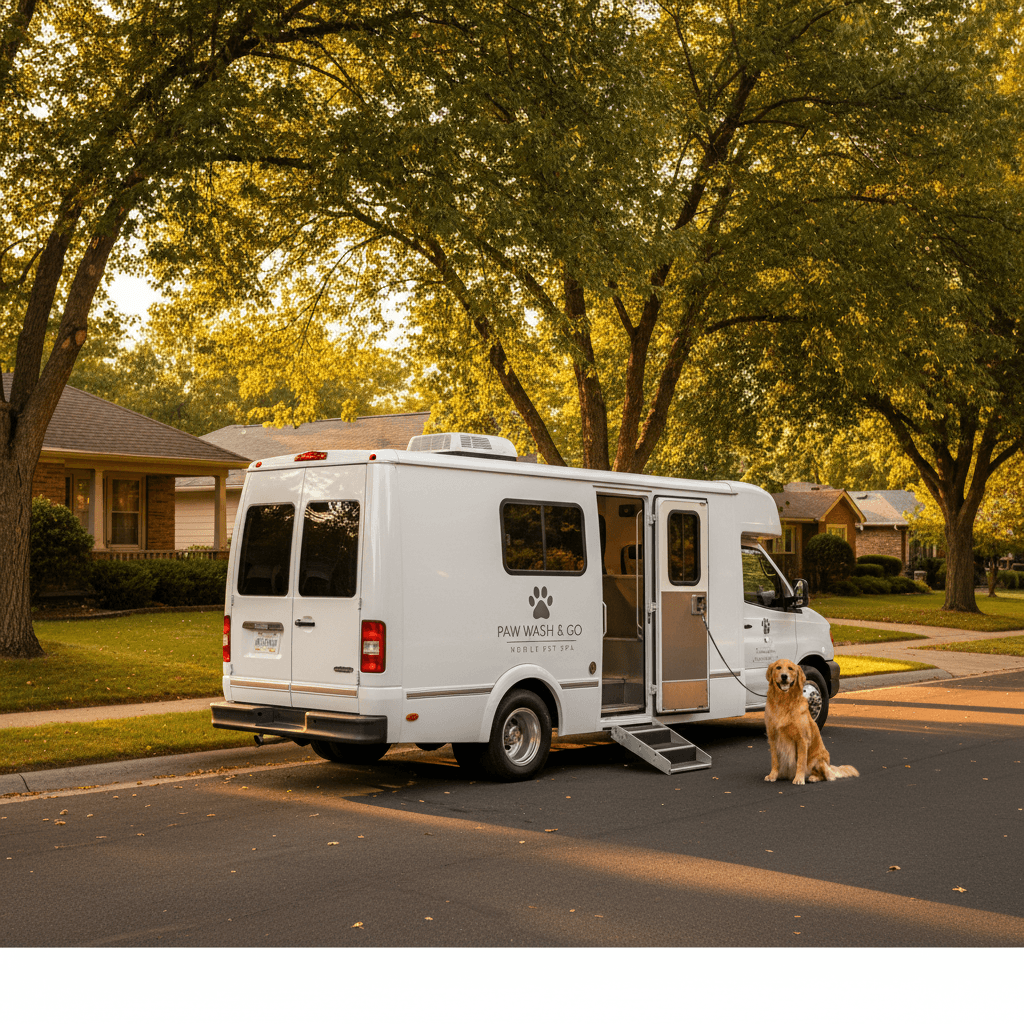
Mobile pet grooming is one of the fastest-growing segments in the pet services industry. In 2026, the U.S. pet grooming market exceeds $11 billion annually, and mobile operations are capturing a growing share of that revenue. If you have grooming skills and an entrepreneurial mindset, a mobile grooming business offers a compelling path: lower overhead than a brick-and-mortar salon, premium pricing power, and the flexibility to build the schedule you want.
This guide covers everything: startup costs, van selection, equipment, licensing, pricing, route planning, client acquisition, and scaling to a fleet. Whether you are brand new to grooming or transitioning from a salon, you will find the detail you need to launch with confidence.
1. Why Mobile Grooming Is Booming
The shift toward mobile grooming is not a fad; it is a structural change in how pet owners want to consume grooming services. Several forces are driving the boom simultaneously.
Convenience is the new luxury. Pet owners are busy. The idea of loading a dog into the car, driving to a salon, waiting two to four hours, then driving back is increasingly unappealing. Mobile grooming eliminates every one of those steps. The van pulls up, the dog is groomed in a calm one-on-one environment, and the owner never leaves home. That convenience commands a premium, and most clients are happy to pay it.
Lower overhead means stronger margins. A traditional grooming salon carries rent, build-out costs, utilities, and often multiple employees just to keep the doors open. A mobile operation’s largest fixed cost is vehicle depreciation and fuel, both of which scale directly with revenue. Experienced mobile groomers routinely net 50–60% of revenue, versus 30–40% for well-run salons.
Higher per-appointment revenue. Because mobile groomers charge a convenience premium on top of standard service rates, average ticket values run 20–40% above comparable salon appointments. A full groom that a salon charges $75 for might fetch $95–$110 on a mobile unit. Multiply that across six to eight appointments per day and the numbers become compelling quickly.
Pandemic-era habits stuck. The COVID-19 pandemic permanently shifted consumer preferences toward at-home services. Mobile grooming bookings surged during lockdowns and, unlike many pandemic-driven behaviors, the preference for home-service grooming never reversed. New cohorts of pet owners who adopted dogs in 2020–2021 were introduced to mobile grooming first and have never switched to salon.
The pet population keeps growing. The American Pet Products Association estimates over 90 million U.S. households own a pet. Dog ownership alone rose by 6 million households between 2019 and 2024. More dogs means more grooming demand, and mobile groomers are perfectly positioned to serve suburban and exurban areas where salons are sparse.
2. Mobile Grooming vs. Salon: Pros and Cons
Before you commit to mobile, it is worth honestly comparing both business models. Each has genuine advantages and genuine drawbacks.
| Factor | Mobile Grooming | Grooming Salon |
|---|---|---|
| Startup cost | $30K–$100K (van + equipment) | $50K–$250K (build-out + equipment) |
| Monthly overhead | Low: fuel, insurance, supplies | High: rent, utilities, staffing |
| Pricing power | 20–40% premium over salon | Standard market rates |
| Appointments per day | 6–8 (one-on-one) | 15–25+ (multiple groomers) |
| Revenue ceiling (solo) | Limited by hours and travel | Higher with multiple groomers |
| Scalability | Add vans and groomers | Add chairs and staff |
| Client stress on pets | Very low (one-on-one, no kennel) | Higher (multi-dog environment) |
| Weather dependency | Moderate (heat, ice, wind) | None |
| Space limitations | Yes; van limits dog size and volume | No |
| Location flexibility | High; serves any neighborhood | Fixed; serves walk-in radius |
The verdict for most solo operators: mobile wins on margins, lifestyle flexibility, and low-risk entry. Salons win on raw revenue ceiling once you build a team. Many successful groomers start mobile and later open a salon, using mobile profits to fund the expansion.
3. Startup Costs Breakdown
One of the most common mistakes new mobile groomers make is underestimating, or overestimating, startup costs. Here is a realistic breakdown based on real market prices in 2026.
| Item | Low Estimate | High Estimate | Notes |
|---|---|---|---|
| Van or trailer (vehicle) | $20,000 | $80,000 | Used cargo van on the low end; new Sprinter or pre-built unit on the high end |
| Custom van build-out | $5,000 | $25,000 | DIY saves money; professional builders run $15K–$25K |
| Grooming table & hydraulic lift | $500 | $2,000 | Hydraulic tables reduce physical strain; worth the investment |
| Professional tub / bathing system | $800 | $2,500 | Stainless steel with ramp access for large dogs |
| HV dryer + stand dryer | $400 | $1,200 | High-velocity dryers are essential; budget for both HV and finishing dryer |
| Clippers, blades, scissors | $800 | $2,500 | Andis, Wahl, Oster brands; build a full set from day one |
| Water system (tanks, pump, heater) | $1,000 | $3,000 | Fresh and grey water tanks; demand water heater |
| Generator or shore power inverter | $1,000 | $3,000 | Honda EU2200i is a popular choice; inverter generators run quieter |
| Business liability insurance | $800/yr | $2,000/yr | Professional liability + commercial vehicle required |
| Commercial vehicle insurance | $1,500/yr | $4,000/yr | Higher than personal auto; shop multiple carriers |
| Business license & permits | $200 | $500 | Varies by city and state |
| LLC formation | $50 | $300 | DIY via your state’s SOS website or LegalZoom |
| Initial marketing & branding | $500 | $2,000 | Logo, van wrap partial, business cards, Google Business setup |
| Grooming software | $39/mo | $99/mo | Essential from day one: scheduling, payments, client records |
| Supplies (shampoo, conditioner, etc.) | $300 | $800 | Initial inventory; ongoing operating cost |
Total estimated startup range: $30,000 – $100,000+. The majority of operators land in the $40K–$60K range: a used van in good condition, a professional build-out, and a complete equipment set. If you are bootstrapping, a well-maintained used Sprinter or Transit with a DIY build can get you operating for under $35K.
Budget a three-month operating reserve on top of startup costs. Revenue in the first 90 days will be building, and you want cash runway so you are not making decisions under financial pressure.
4. Choosing Your Vehicle
Your vehicle is your most consequential decision. It determines your operating costs, your professional image, your capacity, and your reliability for years to come. Take your time here.
Van vs. Trailer
Vans are the most popular choice for solo mobile groomers. They are easier to drive and park, require no separate towing vehicle, and project a more professional image. The downside: a van has a fixed footprint, and upgrading means buying a new vehicle.
Trailers offer more space at lower cost. A well-built grooming trailer can be larger than a van at a fraction of the price. The tradeoff: you need a capable tow vehicle, backing into driveways is challenging, and parking is more difficult in tight suburban streets.
Popular Van Models
| Model | Interior Height | Load Length | Pros | Cons |
|---|---|---|---|---|
| Mercedes-Benz Sprinter (high roof) | 6’4” | 11’6” | Most headroom, premium feel, large aftermarket | Higher purchase price, dealer service only |
| Ford Transit (high roof) | 6’3” | 11’0” | Lower cost, widely available, Ford dealer network | Slightly less interior space than Sprinter |
| Ram ProMaster (high roof) | 6’4” | 11’0” | Front-wheel drive (easier in snow), flat floor | Less resale value, fewer customization options |
| Mercedes-Benz Metris | 4’10” | 7’6” | Compact, easier to park, lower fuel cost | Limited for large dogs, discontinued new production |
For most groomers, the Ford Transit High Roof or Sprinter High Roof is the right choice. Both provide enough headroom to stand comfortably, enough length for a full grooming setup, and strong resale markets.
Custom Build vs. Pre-Built Unit
Pre-built units(vans converted by specialty companies like Hanvey Engineering, Mastercraft, or Wag’n Tails) are the fastest path to operation. They arrive ready to work, professionally plumbed and wired, with warranties on the build. Expect to pay $15K–$35K for the conversion on top of the van cost.
DIY builds are popular among mechanically handy groomers who want to save money. A well-executed DIY build can cost $5K–$10K in materials and produce a setup as functional as a professional build. The investment is time: plan for 3–6 weeks of part-time work. The risk is an amateur plumbing or electrical mistake. If you go DIY, join the Mobile Groomers Facebook groups where experienced operators share build plans freely.
Water Tank Sizing & Generator Requirements
A typical grooming appointment uses 8–12 gallons of water. For an eight-appointment day, you need 80–100 gallons of fresh water capacity, plus equal grey water storage. Most builds run a 50–75 gallon fresh tank and a 50–75 gallon grey tank, refilling and emptying at home or at a self-service water station between route days.
For power, an inverter generator in the 2,200–3,500W range handles most setups: a high-velocity dryer (1,400–1,700W), water heater (1,000–1,500W), and smaller tools. The Honda EU2200i is the industry favorite for its reliability and quiet operation. If you prefer not to run a generator, a 200Ah lithium battery bank with a shore power charger and inverter is a viable all-electric setup for lighter grooming days.
5. Essential Equipment for Your Mobile Grooming Van
Every piece of equipment in your van earns its keep through daily use. Here is the complete list of what a professional mobile grooming setup requires.
Grooming Station
- Hydraulic or electric grooming table: Adjustable height saves your back over a long career. Chris Christensen and ComfortGroom are well-regarded brands.
- Loop and arm: Keeps dogs safely positioned while you work.
- Non-slip mat: Essential on the table surface for all dogs.
- Wall-mounted tool rack: Keeps scissors, clippers, and combs organized and within reach.
Bathing Station
- Stainless steel grooming tub: 36–48 inches wide; look for a walk-in ramp for larger dogs. Shor-Line and Flying Pig are trusted brands.
- Demand water heater: Tankless propane or electric; Eccotemp L5 and similar units are common in mobile builds.
- Handheld showerhead with adjustable pressure
- Shampoo dispenser system: Dilution dispensers save product and time.
- Fresh water tank (50–75 gal) + grey water tank (50–75 gal)
- 12V demand pump: Delivers consistent water pressure from the tank.
Drying
- High-velocity dryer: Forces water out of the coat quickly. XPOWER, B-Air, and Metrovac are popular brands.
- Stand dryer / cage dryer: For fluff-drying and finishing work while multi-tasking.
- Micro-fiber towels: Pre-dry before the HV dryer to cut drying time.
Cutting & Styling Tools
- Professional clippers: Andis ProClip AGC2, Oster A5, or Wahl KM10. Have at least two bodies and multiple blade sizes (10, 7, 5, 4, 3¾).
- Cordless trimmer: Andis Pulse ZR II or similar for face, paws, and detail work.
- Shears set: Straight, curved, and thinning shears. Budget $200–$500 for quality Japanese steel.
- Dematting tools: Rake, dematting comb, Furminator for shedding breeds.
- Nail grinder and clippers
Safety & Sanitation
- Kennel / crate: For safely containing dogs between rinse and dry if needed.
- Ventilation fan: Critical in summer; a roof vent fan keeps the van from becoming dangerous in heat.
- First aid kit: Pet-specific with styptic powder, bandages, and emergency contacts.
- Disinfectant spray: Between every appointment; kennel cough and other infections spread on shared surfaces.
- CO detector: Required if running a propane water heater or generator near the van.
6. Licensing, Insurance & Legal Requirements
Operating a mobile grooming business without proper licensing and insurance is a business-ending risk. A single incident (a dog bite, a fall, a vehicle accident) can result in a lawsuit that wipes out your business and personal assets. Get this right from day one.
Business Structure
Form an LLC (Limited Liability Company)before you take your first client. An LLC separates your personal assets from business liabilities. The cost is $50–$300 depending on your state, and you can file online through your state’s Secretary of State website. Follow up with an EIN from the IRS (free, takes five minutes online) and a dedicated business bank account.
Business License & Permits
Most cities and counties require a general business license ($50–$200 annually). Some municipalities also require a home occupation permit if you store the van at your residence. Check with your city clerk’s office, as requirements vary significantly.
Grooming Certification
No federal law requires grooming certification, but several states have introduced or are considering licensing requirements. Regardless of legal requirements, certification substantially increases client trust and your ability to charge premium rates. The main certifying bodies are:
- National Dog Groomers Association of America (NDGAA): Certified Master Groomer credential
- International Professional Groomers (IPG): Internationally recognized certification
- National Cat Groomers Institute (NCGI): For feline-focused operations
- Groomers Helper: Safety-focused restraint certification becoming an industry standard
Insurance
You need at minimum three types of insurance coverage:
- Commercial auto insurance: Your personal auto policy will not cover a vehicle used for business. Commercial coverage runs $1,500–$4,000 per year. Get quotes from Progressive, State Farm, and specialty providers like Nationwide Pet Business Insurance.
- General liability insurance: Covers property damage and bodily injury claims (including dog bites that occur during your service). Look for $1M per occurrence / $2M aggregate minimums. PetBusiness Insurance, Kennel Pro, and Pethealth Inc. specialize in pet service coverage.
- Care, custody & control coverage: Specifically covers injury or death of a pet in your care. Standard GL policies often exclude this, so make sure it is explicitly included.
Optional but recommended: business interruption insurance to cover income loss if your van is in the shop, and a business owner’s policy (BOP) that bundles GL and property coverage at a discount.
7. Setting Your Service Area & Route Planning
Route planning is where mobile groomers either make or lose money. Drive time is dead time: every minute on the road is a minute you are not grooming and not earning. A well-optimized route is the difference between a six-appointment day that feels rushed and a six-appointment day that ends at 3 PM.
Defining Your Service Radius
Most solo mobile groomers define a 15–25 mile service radius from their home base. Beyond 25 miles, travel time starts eating significantly into your appointment density. Within that radius, you may charge a flat travel fee or tier your fees by distance zone:
- Zone 1 (0–10 miles): No travel fee or $5
- Zone 2 (10–20 miles): $10–$15 travel fee
- Zone 3 (20–30 miles): $20–$30 travel fee
Be consistent and transparent about your zones. Publish them on your booking page so clients self-select appropriately.
Clustering Appointments by Area
The foundational principle of mobile route optimization is geographic clustering: group appointments in the same neighborhood or subdivision on the same day. If you have clients on Oak Street and Pine Avenue two blocks apart, they should be on the same day, back-to-back. Driving across town between appointments is a route planning failure.
Assign a day of the week to each geographic cluster in your service area. Monday is the north side of town, Tuesday is the east suburbs, Wednesday is downtown, and so on. When clients book, they see availability based on when you are in their area. This sounds rigid but clients adapt quickly and appreciate predictable scheduling.
Anchor Appointments
An anchor appointment is a recurring client at the far end of your route who fills your first or last slot. Without an anchor, you might drive 20 minutes to service one client at the edge of your zone. With an anchor, that 20-minute drive supports four more appointments in that neighborhood. Build anchors by offering a small loyalty discount to clients in key geographic positions who commit to regular recurring appointments.
AI-Powered Route Optimization
Manual route planning works when you have 30–40 clients. As your client base grows past 100, the complexity of optimizing daily routes across hundreds of recurring appointments becomes genuinely difficult. This is where AI route optimizationchanges the economics of the business. Groomify’s route optimization engine analyzes appointment locations, time windows, service durations, and traffic patterns to build the most efficient route automatically, minimizing total drive time and maximizing appointments per day.
8. Pricing Your Mobile Grooming Services
Pricing is the lever that most new mobile groomers pull in the wrong direction. The number one pricing mistake is charging salon rates for a mobile service. You are providing door-to-door convenience, a stress-free one-on-one environment, and a premium experience. Price accordingly.
The Mobile Premium
Research consistently shows that mobile grooming clients expect to pay and are willing to pay a 20–40% premium over local salon rates. If the average full groom in your market is $70, you should be charging $85–$100. If salons are at $90, you should be at $110–$130. Check your local competition on Google and Yelp before setting your price sheet.
Sample Price Ranges by Dog Size (2026)
| Dog Size / Breed Type | Bath & Brush | Full Groom | Add-Ons |
|---|---|---|---|
| Small (under 20 lbs): Shih Tzu, Maltese, Yorkie | $55–$75 | $75–$110 | Teeth brushing +$10, anal glands +$15 |
| Medium (20–50 lbs): Cocker Spaniel, Goldendoodle | $70–$95 | $95–$140 | Deshedding treatment +$20–$35 |
| Large (50–80 lbs): Golden Retriever, Labradoodle | $90–$120 | $120–$175 | Flea treatment +$25, blueberry facial +$15 |
| Extra Large (80+ lbs): Bernese Mountain, Standard Poodle | $115–$150 | $150–$225 | Dematting +$1/min, deep conditioning +$20 |
| Cat full groom | $75–$100 | $100–$150 | Lion cut add-on +$25–$40 |
Additional Pricing Policies
- Matting fee: Charge $1–$2 per minute beyond a 5-minute threshold for dematting. This protects your time and discourages owners from neglecting coats between appointments.
- Cancellation policy: Require 24–48 hours notice with a $25–$50 fee for late cancellations. Mobile groomers lose an entire appointment slot when a client cancels at the last minute; you cannot fill that slot with short notice.
- No-show fee: Charge full price for a no-show. You drove there, you waited. You earned that fee.
- Recurring discount: Offer 5–10% off for clients on a regular schedule (every 4, 6, or 8 weeks). This builds route density and predictable income.
9. Getting Your First Clients
The first 30 clients are the hardest to acquire. After that, referrals and recurring bookings create compounding momentum. Here is the playbook for going from zero to a full book.
Google Business Profile
Claim and fully optimize your Google Business Profile before you launch. This is free and drives more local service leads than any other single channel. Complete every field: hours, service area (list specific zip codes), services (with prices), photos of your van and work, and a booking link. Ask your first 10 clients for Google reviews immediately after their appointment. Five-star reviews in the first 30 days dramatically accelerate your visibility in local search.
Nextdoor & Facebook Neighborhood Groups
Nextdoor is the highest-converting channel for mobile service businesses. Pet owners are highly active on Nextdoor and frequently ask for recommendations. Join every Nextdoor neighborhood in your service area, create a business profile, and post an introductory offer: “I just launched mobile grooming in [neighborhood]: 20% off for first-time clients this month.” Similarly, join Facebook groups for your target neighborhoods and local dog owner communities. Do not spam; be genuinely helpful and your business will organically come up in conversations.
Vet & Pet Store Partnerships
Veterinary clinics are the most trusted referral source for pet service businesses. Visit independent vets in your service area with a business card and a brief pitch: you offer stress-free one-on-one grooming, you are insured, and you would love to be on their referral list. Many vets will recommend mobile groomers to owners of anxious dogs who struggle in busy salon environments. Independent pet supply stores and doggy daycares are equally valuable partnership targets.
Dog Parks & Community Boards
Dog parks are a direct channel to your target audience. Show up with business cards and a willingness to talk. If local ordinances allow, post flyers on the park’s community board. Consider sponsoring a local dog event or rescue organization; the goodwill and visibility from a $200 sponsorship can generate thousands in new client revenue.
Online Booking & the 24/7 AI Receptionist
One of the biggest drivers of new client conversion is frictionless online booking. A prospect who discovers you at 9 PM on a Tuesday wants to book immediately; if they have to wait until the next morning to call, many will book a competitor instead. Set up online booking from day one, and consider a 24/7 AI receptionist that answers inquiries, quotes prices, and books appointments automatically, even while you are elbow-deep in a Labradoodle. Groomers using AI booking assistants report capturing 25–35% more leads from after-hours inquiries.
Referral Program
Happy clients are your most powerful marketing asset. Build a formal referral program: “Refer a friend who books, and you both get $15 off your next appointment.” Announce it after every appointment, include it in your post-appointment text message, and put it on your booking confirmation page. A well-run referral program can reduce your cost per new client acquisition to nearly zero.
10. Scaling Your Mobile Grooming Business
Once you have a full book of recurring clients and a waitlist, you face the best problem in business: more demand than supply. Here is how to scale strategically without sacrificing the quality and service reputation you built.
Adding a Second Van
The most natural first step is a second van. Before you buy, answer three questions: Do you have enough recurring clients to fill a second route from day one? Do you have a qualified groomer to run it? And do you have the systems (scheduling, payments, client management) to coordinate two mobile units without chaos?
The ideal second-van launch strategy is to hire a groomer six to eight weeks before the van is ready, have them shadow your routes, learn your standards, and build client relationships. When the second van launches, clients already know and trust that groomer.
Hiring Mobile Groomers
Finding qualified mobile groomers is genuinely difficult; grooming is a skilled trade with a shortage of certified practitioners. Your best sources are grooming school graduates, salon employees ready to go independent, and grooming Facebook and Reddit communities. Offer above-market pay (50–55% commission is standard for mobile groomer employees), mileage reimbursement or a company van, and the flexibility that draws people to mobile work in the first place.
Classify employees correctly. The IRS has specific criteria for independent contractor vs. employee status; in most mobile grooming arrangements where you control the schedule, provide the van, and set the rates, groomers are employees. Misclassification carries substantial penalties. Consult a CPA when you make your first hire.
Fleet Management & Multi-Van Scheduling
Coordinating multiple vans manually is unsustainable past two units. You need software that provides a real-time view of where every van is, which appointments are on each route, and how to re-optimize when something changes: a cancellation, a van breakdown, or a groomer calling in sick. This is where purpose-built mobile grooming software becomes critical infrastructure rather than a nice-to-have.
As you scale to three, four, or five vans, you are running a logistics operation as much as a grooming business. Invest in the systems early. The groomers who build successful multi-van operations are almost always the ones who systematized scheduling, client communication, and payments before they needed to, not after.
11. Software for Mobile Groomers
Mobile grooming has unique software requirements that general small business tools do not address. Running your business on a combination of a paper appointment book, Venmo for payments, and Instagram DMs for booking is a recipe for missed appointments, unpaid invoices, and burnout. The right software stack makes your operation professional, scalable, and dramatically less stressful.
What Mobile Groomers Actually Need
- Mobile-first scheduling: Manage and modify appointments from your phone, not only from a desktop. When you are between appointments and a client calls to reschedule, you need to handle it in 30 seconds.
- Route optimization: Automatically build daily routes that minimize drive time and cluster appointments geographically. See Groomify’s AI route optimization for a purpose-built example.
- GPS tracking:Real-time van location visible to both you (for multi-van management) and clients. Sending clients an “I’m 10 minutes away” notification dramatically reduces no-shows and increases client satisfaction.
- Client ETA notifications: Automated texts that tell clients when you are en route and how far away you are. This is table stakes in 2026; clients expect it.
- Mobile payments: Accept credit cards from the van without needing a separate card reader or asking clients to run out in their pajamas to pay. Integrated payments mean invoices are generated, sent, and paid without manual follow-up.
- Client & pet records: Store breed, coat type, known health issues, behavioral notes, vaccination records, and grooming history for every pet. This information makes every appointment better and protects you legally.
- AI scheduling & booking: An AI scheduling engine that automatically fills your calendar by geographic cluster, honors recurring appointment preferences, and sends rebooking reminders when a pet is due for their next appointment.
- 24/7 AI receptionist: The grooming industry loses an enormous amount of revenue to missed calls and unanswered inquiries. An AI receptionist answers every inquiry, quotes prices, checks availability, and books the appointment whether you receive the message at 2 PM or 2 AM.
Mobile groomers who use purpose-built software report saving 45–60 minutes per day on administrative tasks, the equivalent of adding one additional appointment to your schedule every day.
Choosing the Right Software
When evaluating grooming software, look for: mobile app quality (not just a mobile-responsive web app but a real native app), offline functionality (essential when you have no signal in rural areas), integrated payment processing with transparent fees, and genuine customer support from people who understand the grooming industry.
Groomify is designed specifically for mobile pet groomers, not adapted from a general appointment booking tool. The AI route optimization, GPS tracking, client ETA notifications, and 24/7 AI receptionist are built for the specific operational reality of running a grooming business from a van.
Final Thoughts: Is Mobile Grooming Right for You?
Mobile grooming is not an easy business: it is physical work, in a small space, in all weather conditions, with animals who do not always cooperate. But it is also an extraordinarily rewarding business for the right person. You set your own schedule, serve clients who genuinely appreciate the convenience you provide, build relationships with pets you see every four to six weeks for years, and build an asset (a client list and a brand) that has real value.
The operators who succeed in mobile grooming are not just skilled groomers; they are business owners who take marketing, pricing, route planning, and client experience as seriously as the groom itself. The good news is that the bar for professional operations in most mobile grooming markets is still relatively low. A groomer with strong skills, professional communication, reliable scheduling software, and a clean van can stand out quickly and build a waitlist in six to twelve months.
Start with a solid plan, invest in the right vehicle and equipment, price your services appropriately, and use the tools available to run a professional operation from day one. The mobile grooming business you build can be the foundation of something much larger, or the perfect lifestyle business that gives you exactly the income and flexibility you want.
Ready to run your grooming business with AI?
Groomify is built for mobile groomers: AI route optimization, GPS tracking, mobile payments, and a 24/7 AI receptionist that books while you groom.