Cat Grooming: The Complete Guide for Professional Groomers (2026)
Cat grooming is one of the most underserved, highest-margin services in the pet industry. With 67 million cat-owning households in the US and very few groomers willing to work with felines, the groomers who learn the craft are filling appointment books months out. This guide covers everything you need to offer professional cat grooming services with confidence.
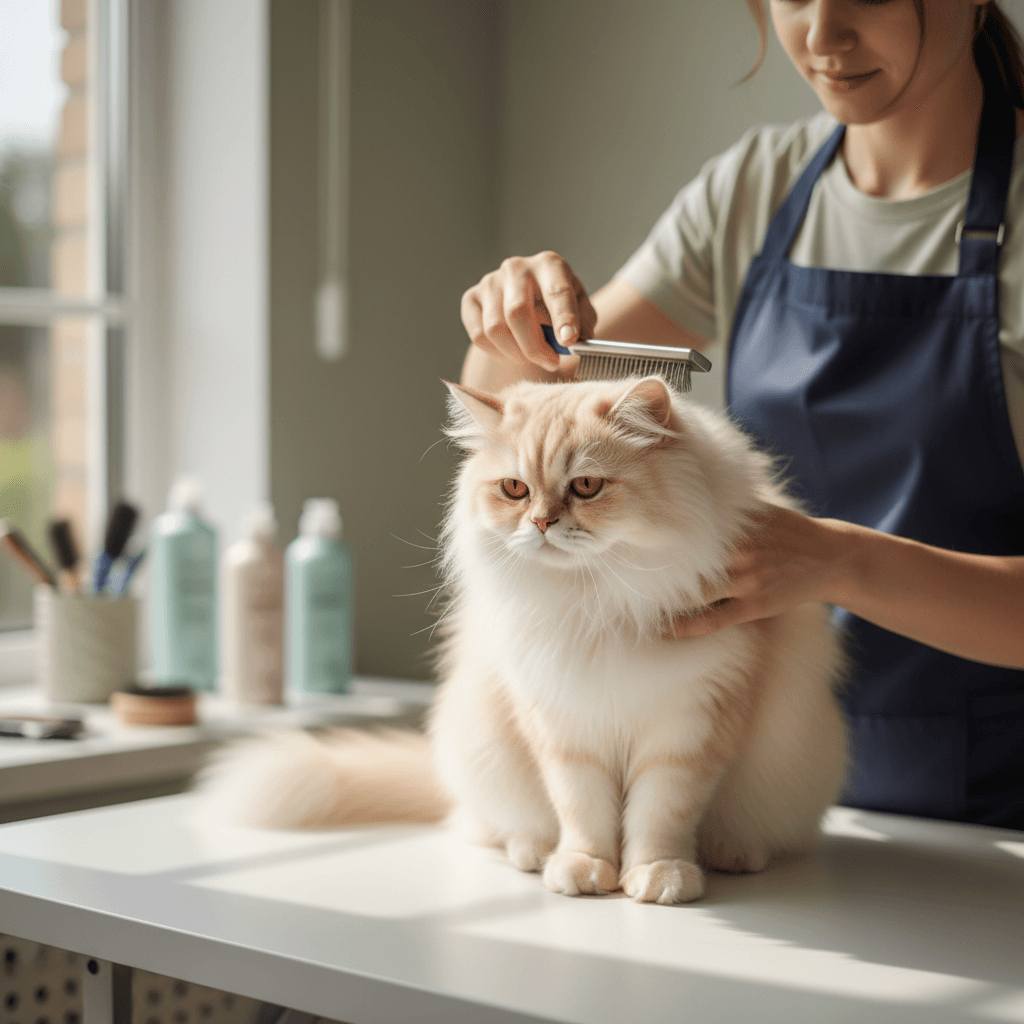
Why Cat Grooming Is Underserved and High-Margin
Most grooming salons have a packed dog schedule and no cat services at all.
That gap is a gold mine. According to the American Pet Products Association, there are approximately 67 million cat-owning households in the United States, nearly as many as dog-owning households. Yet the number of groomers who actively market and accept cat clients is a tiny fraction of the industry. In most cities, a cat owner who needs a lion cut or a mat removal will call ten salons before finding someone who says yes.
Cat grooming also commands significantly higher prices than equivalent dog services. A basic bath and brush-out on a medium-sized dog might run $55–$75. The same service on a domestic shorthair cat runs $65–$95, and a full lion cut on a long-haired Persian or Maine Coon regularly books at $120–$180. Clients don't balk at those prices because they've already been told no by everyone else. They're grateful to have found someone who can help.
The revenue math is compelling. If you add just four cat grooming slots per week at an average ticket of $90, that's $360 per week, $18,720 per year, from a service stream that most of your competitors aren't even offering. And because cat clients tend to be intensely loyal (they know how hard it is to find a good cat groomer), cat clients rebook at extremely high rates.
The barrier to entry is real: cats require different techniques, different temperament handling, and a calmer environment than dogs. But those barriers are learnable, and once you've mastered them, you'll have a niche with very little local competition and strong client loyalty.
Essential Cat Grooming Services to Offer
Before you start marketing to cat owners, you need to decide which services you'll offer. Cat grooming runs the spectrum from a quick nail trim to a full spa treatment, and each service has a different skill requirement, time investment, and price point.
Bath & Blow Dry
The foundation of cat grooming. A professional bath removes dander, loose hair, skin oils, and any debris the cat has collected. Unlike dogs, most cats have never been bathed by a professional (or anyone), so this is often the most stressful part of the appointment for a first-timer. Proper technique (warm water, calm handling, a cat-safe shampoo) makes all the difference. Typical price: $55–$95 depending on coat length and cat temperament.
Lion Cut (Full Body Clip)
The most recognizable cat grooming service and the one that fills appointment books fastest. The lion cut involves clipping the body coat short (typically a #4 or #5 blade) while leaving the head, mane area, leg "boots," and tail plume natural. It's the go-to for severely matted cats, cats with heat issues, and owners who want to reduce shedding dramatically. A lion cut takes 90–120 minutes on average and requires a cat that can tolerate extended handling. Typical price: $120–$180.
Sanitary Trim
Trimming the fur around the hindquarters to prevent fecal matter from becoming trapped in the coat, a very common issue in long-haired cats. Quick, practical, and easy to add onto any other service. Typical price: $20–$35 as an add-on.
Nail Trimming
Cat nails grow in a curve and can become embedded in paw pads if left too long. A nail trim is the easiest entry point for a new cat client: low stress, short time commitment, builds trust. Offer it as a standalone to get cats comfortable coming in before committing to bigger services. Typical price: $15–$25 standalone, free or discounted as an add-on.
Ear Cleaning
Cats with folded or large ears accumulate wax and debris. A professional ear cleaning prevents infections. Use a cat-specific ear cleaner and cotton balls; never cotton swabs. Typical price: $15–$20 as an add-on.
De-Matting
Mats range from small tangles that can be worked out with a comb to dense pelted masses that sit directly against the skin. Mild mats can be de-matted; severe cases require shaving. Always assess mat severity before quoting, because some de-matting jobs become lion cuts once you see the actual condition of the coat. Charge by severity and time. Typical price: $25–$60 standalone; shave-out included in lion cut pricing.
De-Shedding Treatment
A deep conditioning shampoo and forced-air drying process that loosens and removes the undercoat far more effectively than brushing alone. Hugely popular with owners of double-coated breeds like Norwegian Forest Cats and Ragdolls. Dramatically reduces the amount of fur on furniture and clothing for 4–6 weeks. Typical price: $70–$110.
Cat vs. Dog Grooming: Key Differences Every Groomer Must Know
If you approach cat grooming the way you approach dog grooming, you will get scratched, bitten, and frustrated. Cats are not small dogs. Their physiology, stress responses, and tolerances are fundamentally different; understanding those differences is the foundation of safe, effective feline grooming.
| Factor | Dog Grooming | Cat Grooming |
|---|---|---|
| Temperament | Generally socialized to handling; most tolerate grooming with training | Highly variable; many cats have never been handled by strangers and react with fear or aggression |
| Restraint | Tables with grooming loops; relatively straightforward | Minimal, gentle restraint only; over-restraint escalates fear and aggression rapidly |
| Skin | Thicker, more forgiving; tolerates moderate clipper heat | Very thin and delicate; clips and nicks happen easily, especially in skin folds |
| Drying | Cage drying common; HV dryers widely used at high heat/speed | No cage dryers; HV dryers on lowest setting only; towel drying + warm low-speed dryer |
| Time per session | 30–90 minutes depending on breed and service | 60–150 minutes; stress breaks may be required |
| Clippers | Standard dog clippers; noise tolerated | Quiet, low-vibration clippers strongly preferred; noise is a major stressor |
| Shampoo | Dog-specific or general pet shampoos | Must be cat-safe; many dog shampoos contain ingredients toxic to cats (especially tea tree oil, permethrin) |
| Body language cues | Tail wagging, panting, obvious signals | Subtle: tail flicking, flattened ears, skin twitching, easy to miss until it's too late |
The biggest mental shift for dog groomers entering the feline space: you are working on the cat's timeline, not yours. Rushing a cat does not make the appointment go faster; it causes a meltdown that adds 30 minutes and a trip to the first-aid kit. Slow, deliberate, gentle handling consistently produces faster, calmer appointments than any amount of forced speed.
Step-by-Step Professional Cat Grooming Process
Every cat grooming appointment follows the same general sequence. Deviating from this order, especially skipping the pre-groom assessment or doing nails at the end, is one of the most common mistakes new cat groomers make.
Step 1: Pre-Groom Assessment (5–10 minutes)
Before you touch the cat, observe it in the carrier for 2–3 minutes. Note posture, breathing, and vocalizations. Is the cat huddled and frozen (fear), or curious and alert (manageable)? Hissing and growling at this stage are warnings, not deal-breakers, but important information.
Conduct a hands-on assessment: feel through the coat for mats, check skin condition, look for lumps, bumps, wounds, or parasites. Check ears, eyes, and teeth. Note anything unusual in the client file. A cat that came in healthy and leaves with a pre-existing skin lesion you didn't document is a liability issue.
Step 2: Nail Trim (First: Always)
Trim all nails before anything else. This is non-negotiable for cat safety. Cat nails are weapons, and a cat that feels threatened will use them. Trimmed nails dramatically reduce the severity of any scratching incident. Use sharp, cat-specific nail trimmers; dull trimmers crush the nail rather than cutting cleanly, which is painful and increases stress.
Trim just the sharp tip. Clear nails show the quick easily, but darker nails require extra care. When in doubt, take off less. A conservative nail trim is always better than a quicked nail on an already-stressed cat.
Step 3: Dry Brushing & Mat Assessment
Before getting the cat wet, do a thorough dry brush-out. This removes loose hair, reveals the true severity of any matting, and is often calming for cats who enjoy being brushed. Use a wide-tooth greyhound comb to work through the coat systematically from tail to head. Do not force through mats; note their location and plan your approach.
Step 4: Bathing
Fill the sink or tub with a few inches of warm water before bringing the cat in, because the sound of running water mid-bath escalates stress significantly. Water temperature should be comfortably warm (around 100°F / 38°C). Support the cat's feet on a non-slip mat at all times.
Wet the coat thoroughly using a handheld sprayer on a gentle setting, working from the back of the neck to the tail. Never spray directly at the face; use a wet cloth to clean the face separately. Apply a diluted cat-safe shampoo and massage gently into the coat. Rinse completely; shampoo residue causes skin irritation.
For de-shedding treatments, follow the shampoo with a conditioning soak of 3–5 minutes before rinsing.
Step 5: Drying
Wrap the cat immediately in a warm, absorbent towel. Gentle pressure (not rubbing, which creates tangles and static) removes the bulk of the water. For short-haired cats, towel drying followed by 10–15 minutes in a warm (not hot) room may be sufficient.
For longer coats, use a low-velocity, low-heat dryer. Hold the nozzle at least 12 inches from the coat, keep it moving, and watch the cat's reaction continuously. Many cats tolerate this surprisingly well once the water is off them. Never use a cage dryer on a cat. The enclosed space and inability to escape the heat creates extreme stress and poses a real safety risk.
Step 6: Brushing, De-Matting, or Clipping
Once dry, do a final thorough brush-out. For matted cats, now is when you assess whether mats can be worked free or need to be shaved. Small, surface mats can often be split with mat-splitting tools and worked free with a comb. Pelted mats against the skin must be carefully shaved; use a #10 blade under the mat, not over it, and work slowly to avoid nicking the thin feline skin.
For lion cuts, this is when clipper work begins. Use a quiet clipper with a #4 or #5 blade for the body, working against the grain of the coat. Take your time around the belly, inner thighs, and armpits, as these areas have loose skin folds where cuts happen most easily.
Step 7: Sanitary Trim, Ear Cleaning, Final Check
Complete any add-on services: sanitary trim, ear cleaning, paw pad trimming. Do a final visual check of the entire cat: coat, skin, nails, ears. Note anything that should be flagged to the owner or their vet. Take a photo for the client file before releasing the cat.
Handling Difficult Cats Safely
The number one reason groomers don't offer cat services is fear of getting hurt. That fear is not irrational, as a panicked cat can inflict serious injuries quickly. But most of those injuries happen because of handling mistakes that are entirely preventable. Learning to read feline body language and respond appropriately is the most valuable skill you can develop as a cat groomer.
Reading Feline Body Language
Cats signal their stress escalating long before they bite or scratch. The key signals, in order of escalation:
- Early warning: Tail twitching or lashing, skin rippling along the back, pupils dilating, ears rotating back
- Moderate stress: Ears flattened sideways ("airplane ears"), body low and tense, hissing with mouth closed, attempting to move away
- High stress: Open-mouth hissing or growling, spitting, batting with claws out, attempting to bite
- Threshold exceeded: Full defensive aggression: scratching, biting, attempting to escape at all costs
Your goal is to keep the cat at early warning level or below. The moment you see moderate stress signals, slow down, reduce stimulation, and give the cat a moment. A 60-second pause when you notice tail lashing is worth far more than the 20 minutes you'll lose once the cat crosses the threshold.
The Towel Wrap Technique
The "purrito," wrapping a cat snugly in a towel, is the most widely used restraint technique in cat grooming and veterinary medicine. It limits the cat's ability to scratch while providing a sense of security (pressure is calming to many cats). Wrap snugly but not tightly; you should be able to slide a finger under the towel. Expose only the area you're working on.
E-Collars and Cat Muzzles
Cat muzzles cover the eyes as well as the mouth, which has a calming effect by reducing visual stimulation. They're appropriate for cats that are difficult to handle but not in full panic. They should never be left on for more than a few minutes and should never be used as a shortcut to avoid proper handling technique. E-collars (Elizabethan collars) can prevent biting without covering the eyes, which is useful for cats that bite but aren't visually reactive.
Always inform clients in advance if you use these tools, and document their use in the appointment notes.
When to Stop
Knowing when to stop is a professional skill, not a failure. If a cat is in full defensive aggression and you've tried all your de-escalation techniques, stopping the appointment is the right call. A partial groom completed safely is better than a full groom that injures the cat, injures you, or traumatizes the cat so badly that it can never be groomed again.
Charge a handling fee for difficult appointments (more on pricing below) and provide the owner with clear notes on what was completed, what wasn't, and what they can do to help desensitize the cat before the next visit.
Sedation Grooming
Some cats genuinely cannot be safely groomed without sedation: severely matted coats, trauma histories, extreme fear responses, or underlying pain conditions that make handling intolerable. Sedation grooming must only be performed by or under the direct supervision of a licensed veterinarian. As a groomer, your role in this scenario is to partner with a local vet clinic: they administer the sedation, you perform the groom on-site at the vet. Build those relationships, as they're valuable for your most challenging cases and excellent for referral traffic.
Building Trust Over Multiple Visits
First appointments with anxious cats are almost always the hardest. Cats that come back regularly become measurably easier to groom as they learn the environment is safe. Encourage clients to bring their cats in for "happy visits," a quick nail trim and some treats with no big services, between full grooms. These low-stakes positive experiences reprogram the cat's association with your salon and pay dividends on every subsequent appointment.
Cat Grooming Tools & Equipment
Your existing dog grooming kit is not adequate for cats. Some tools carry over; many don't. Investing in cat-specific equipment makes your work safer, faster, and more comfortable for the cat.
Clippers
This is the most important equipment investment. Standard dog clippers are too loud and vibrate too aggressively for most cats. Look for clippers designed for cats or small animals, with quieter motors and lower vibration as the key specs. The Heiniger Saphir and Wahl BravMini are popular choices in the professional cat grooming community. Blade heat is a critical concern: cat skin is thin and burns easily. Check blade temperature frequently and use coolant spray.
Combs
The greyhound comb (a long metal comb with both coarse and fine tooth spacing) is the workhorse of cat grooming. Use it for everything from mat detection to final finishing. Have both a coarse-tooth version for de-matting and a fine-tooth version for polishing the coat.
Brushes
A pin brush or soft slicker brush for daily-type brushing on medium coats. A rubber curry comb works surprisingly well on short-haired cats for removing loose hair and providing a gentle massage. Avoid stiff-bristle slicker brushes; they're harsh on feline skin.
De-Shedding Tools
The Furminator and similar undercoat rakes work well on cats but must be used gently. Over-use strips the coat and can cause skin irritation. Use them sparingly as a finishing tool after the bath and dry, not as a primary de-matting implement.
Dryers
A standard high-velocity dryer on its lowest speed and heat setting is appropriate for finishing the coat. A warm-air stand dryer is gentler and useful for shy cats; position it near (not directly on) the cat while you brush. Some cat groomers use a kennel dryer on the lowest setting with the door open as a gentle warm-air option, but never a fully enclosed cage dryer.
Shampoos & Conditioners
Always use a shampoo specifically formulated and labeled as safe for cats. Never use dog shampoos on cats, as many contain ingredients that are toxic to felines, including tea tree oil, permethrin, and certain essential oils. Look for gentle, pH-balanced, fragrance-free or lightly-scented formulas. For de-shedding, a hydrating conditioner or de-shed treatment improves results significantly. Bio-Groom Super White, Veterinary Formula Clinical Care, and Isle of Dogs all offer cat-safe lines.
Nail Trimmers
Cat nails are round in cross-section, unlike dog nails. Use scissor-style trimmers designed for cats; they give you more control than guillotine-style for the curved feline nail. Keep them sharp; replacing them regularly is cheaper than the stress of a bad nail trim.
Non-Slip Surfaces
Cats that feel unstable on slippery surfaces panic. Line your grooming table and sink with rubber matting or a towel at all times. A cat that has secure footing is a calmer cat.
Common Cat Grooming Mistakes (and How to Avoid Them)
Even experienced dog groomers fall into these traps when they first start working with cats. Knowing them in advance saves you from a painful learning curve.
Using Dog Products
The most dangerous mistake. Cats metabolize chemicals differently than dogs, and what's harmless to a Labrador can be lethal to a cat. This applies to shampoos, conditioners, flea treatments, and finishing sprays. Keep your cat products stored separately and labeled clearly. If you're not sure a product is cat-safe, don't use it.
Cage Drying
A wet cat placed in a warm cage to dry while you work on another animal is a recipe for heat stroke and extreme psychological stress. Cats cannot regulate their body temperature efficiently when wet. They also cannot escape an enclosed space, which compounds the panic. Never cage dry a cat, even briefly.
Rushing
Trying to groom a cat at dog grooming speed will backfire every time. Cat appointments take longer, and that's built into your pricing. Accept it, schedule accordingly, and stop treating it as a problem to solve. The groomers who build thriving cat businesses are the ones who give themselves enough time to do the work properly.
Ignoring Stress Signals
"Powering through" when a cat is clearly stressed is how groomers get hurt and how cats develop lasting negative associations with grooming. Stress signals are communication; they're the cat telling you what it needs. Respond to them early, before they escalate.
Saving Nails for the End
Always, always trim nails first. A cat that has been through a full groom is more stressed at the end of the appointment than the beginning. Trimmed nails at the start mean less damage if something does go wrong partway through.
Skipping the Pre-Groom Assessment
Jumping straight into bathing a cat you haven't assessed can mean discovering severe skin conditions, hidden wounds, or extreme mat severity mid-bath. Assessment takes 10 minutes and prevents hours of problems.
Not Documenting Cat Temperament
Every cat appointment should produce detailed notes: stress level (1–5 scale), what techniques worked, what didn't, any health observations, and what was and wasn't completed. This information is invaluable for every subsequent appointment, yours or a colleague's. Track it in your grooming software so it's attached to the pet profile and visible at the start of every visit.
Marketing Cat Grooming Services to Fill Your Books
You don't have to spend a fortune on marketing to attract cat clients. Cat owners have one very powerful motivation working in your favor: desperation. Most of them have been turned down repeatedly and will enthusiastically recommend you to every cat owner they know the moment they find a groomer who actually says yes.
Update Your Website and Booking System First
Before you tell anyone about your new service, make sure cat grooming appears prominently on your website service page, your online booking system, and your Google Business Profile. Cat owners searching "cat groomer near me" need to be able to find you and book easily. If your online booking only shows dog services, you'll lose them before they ever call.
Lead with the Specific Services
Don't just say "we groom cats." Say "we offer professional lion cuts, de-shedding treatments, and mat removal for cats of all breeds." Cat owners know what their cat needs and are searching for those specific terms. The more specific your marketing language, the better your search visibility and the more confident potential clients feel.
"Cat-Only" Hours
Many cat owners are nervous about bringing their cats into an environment full of barking dogs. Consider dedicating specific time blocks, even just Tuesday mornings, as cat-only hours where no dogs are in the salon simultaneously. The absence of dog sounds and smells makes an enormous difference to cat stress levels and is a marketing differentiator you can highlight explicitly.
Once word gets around that you offer a calm, cat-friendly environment, cat owners will seek you out specifically for it.
Social Media Content
Cat content performs exceptionally well on social media, and it's a fact of the internet. A before-and-after photo of a lion cut transformation, a short video of a fluffy Persian getting a blow-dry, a reel showing a formerly matted coat after de-matting: these posts get shared by cat lovers far beyond your local area, driving brand awareness and local inquiries. Post consistently and encourage happy clients to tag you.
Partner With Local Veterinarians
Vets frequently field calls from clients asking for cat grooming referrals. A simple in-person introduction and a stack of business cards at local feline-friendly vet clinics can keep your schedule full. If you offer sedation grooming in partnership with a vet clinic, formalize that relationship, as it's excellent for both parties.
Cat Rescue Groups and Shelters
Local cat rescues regularly have foster cats in need of grooming before adoption. Offering discounted or complimentary grooming for rescue cats builds community goodwill, gives you practice on cats of varied temperaments, and puts your business in front of every cat-adopting family that comes through that rescue.
Pricing Cat Grooming Services: Charge What You're Worth
Cat grooming should be priced higher than equivalent dog grooming. Full stop. Cat appointments typically take longer, carry higher handling complexity, and require cat-specific products and equipment. Groomers who undercharge for cat services quickly burn out and stop offering them.
Cat owners are not price-sensitive about grooming in the way dog owners sometimes are. They've often gone months without finding anyone willing to take their cat at all. When they find you, price is rarely the reason they say no.
Suggested Pricing Structure
| Service | Short Hair | Medium Hair | Long Hair / Complex |
|---|---|---|---|
| Bath & Brush-Out | $55–$70 | $70–$90 | $90–$115 |
| De-Shedding Treatment | $65–$85 | $85–$105 | $100–$130 |
| Lion Cut (full) | $110–$135 | $130–$155 | $155–$185 |
| Nail Trim (standalone) | $15–$25 | ||
| Sanitary Trim (add-on) | $20–$35 | ||
| Ear Cleaning (add-on) | $15–$20 | ||
| Mat Removal (mild–moderate) | $25–$60 (assessed on intake) | ||
| Difficult Handling Surcharge | $20–$50 (applied as needed) | ||
Handling Surcharges
Implement a tiered handling surcharge for cats that require additional time or safety measures. A cat that needs towel wrapping for the entire appointment or requires two groomers is genuinely more expensive to groom, and your pricing should reflect that. Be transparent about this policy on your website and in your intake form. Most cat owners fully understand and appreciate the transparency.
Partial Groom Policy
When a cat cannot safely complete a full groom, you still charge for the work completed plus the handling time. Establish a clear partial groom policy so there's no awkward conversation at checkout. A suggested policy: full price for any appointment reaching the 60-minute mark, regardless of services completed; prorated for shorter appointments.
Frequency Discounts
Cats that come in regularly (every 6–8 weeks) are easier to groom, take less time, and are less likely to become severely matted. Incentivize regularity with a modest discount for pre-booked recurring appointments; 10% is sufficient. The improved revenue predictability and reduced handling difficulty are worth far more than the discount you're giving up.
How Grooming Software Helps You Manage Cat Clients
Cat grooming is detail-intensive in a way that dog grooming often isn't. Every cat is different. What worked brilliantly on a Maine Coon last month may be completely wrong for the Siamese coming in tomorrow. Keeping meticulous records isn't optional; it's the professional foundation that makes every appointment safer and more efficient.
That's where purpose-built grooming client management software earns its keep. A good platform stores a complete profile for every pet: breed, age, coat type, health conditions, medication, vet contact, and, critically, detailed temperament notes from every previous appointment. When a client calls to book their cat, you already have notes on the cat before the conversation starts.
Temperament Notes That Actually Get Used
The value of temperament notes is only realized if every groomer on your team can access them instantly at appointment start. Cloud-based software attached to the pet profile means a groomer who has never seen a particular cat before walks into the appointment knowing it needs extra nail care, hates the HV dryer, and calms down with a towel wrap.
Automated Rebooking Reminders
Cat owners are not as accustomed to regular grooming schedules as dog owners, and they often wait until the cat is severely matted before calling. Automated scheduling reminders sent 4–6 weeks after each appointment prompt clients to rebook before the coat gets out of hand. This keeps your revenue consistent, keeps your clients' cats in better condition, and dramatically reduces the number of emergency mat-removal appointments you have to deal with.
Online Booking for Cat Services
Cat owners often research and book outside business hours; they're searching "cat groomer" at 11pm and want to book immediately. Online booking that clearly lists cat-specific services, allows service selection, and captures intake information (coat length, health conditions, temperament history) before the appointment means you arrive prepared and the client feels understood before they've even walked in the door.
For salon owners running a mixed dog and cat operation, software that supports separate service menus, species-specific intake forms, and cat-only time block scheduling makes the logistics of managing both client types infinitely simpler. The manual tracking alternative, paper files, mental notes, text messages, breaks down quickly as your cat client base grows, and it's that breakdown that leads to the mistakes (wrong products, missed health notes, overbooking) that make cat grooming feel harder than it actually is.
The groomers building genuinely profitable cat grooming businesses in 2026 aren't doing it through exceptional talent alone. They're doing it by treating cat clients with the same systems, consistency, and professionalism they bring to their dog business. The tools exist to make that straightforward.
Ready to run your grooming business with AI?
Groomify helps you manage cat and dog clients with AI-powered scheduling, pet profiles with temperament notes, and automated reminders.